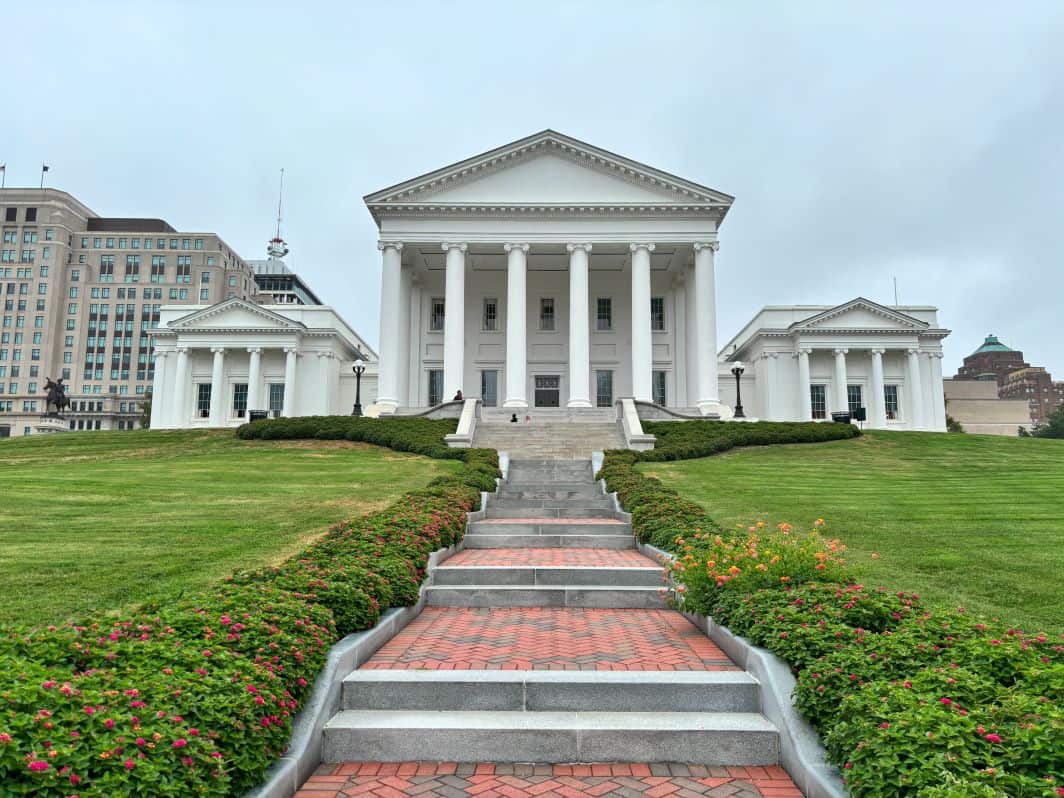
Virginia State Capitol: U.S. Capitols Challenge
After visiting all 50 states, we found ourselves asking: what’s next? That’s when a new idea sparked. Why not visit every U.S. State Capitol? We set out on this exciting new adventure, sharing stories from each Capitol to inspire you to explore them too.
Up next on our Capitol adventure: the Virginia State Capitol in Richmond!
For us, visiting this Capitol wasn’t just another stop on our 50 State Capitols Challenge, it was a chance to walk in the footsteps of leaders who helped define not only Virginia but the nation. This building has a presence that feels monumental, especially considering it served as a model for many Capitols that followed.
Capitol Square
Located in the heart of downtown Richmond, the Virginia State Capitol rises at the center of Capitol Square. This beautifully landscaped public park blends history, art, and civic life. The square is home to monuments, statues, and memorials that celebrate Virginia’s leaders, milestones, and pivotal moments in history.
Strolling through Capitol Square gives visitors a deeper understanding of Virginia’s influential role in American history. From the Revolutionary era to the civil rights movement, each monument and landmark tells a story. This makes the square both a place of reflection and a great starting point for exploring the Capitol itself!
George Washington Equestrian Monument
The centerpiece of Capitol Square is the George Washington Equestrian Monument.
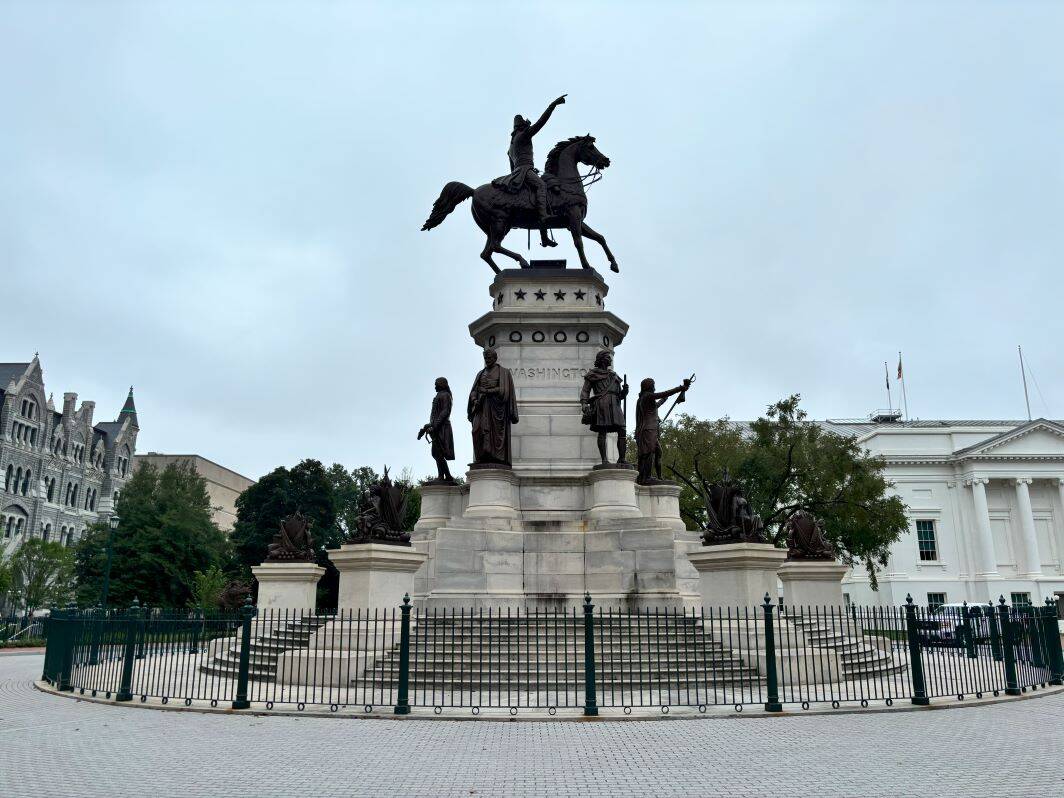
This towering statue depicts Washington on horseback, surrounded by additional statues of prominent Virginians, including Thomas Jefferson, Patrick Henry, and John Marshall, among others, who helped shape the nation’s founding.
The monument not only celebrates Washington as Virginia’s most famous leader but also underscores the state’s influence during the Revolutionary era.
Virginia Women’s Monument – Voices from the Garden
A more recent addition to Capitol Square is the Virginia Women’s Monument, “Voices from the Garden”.
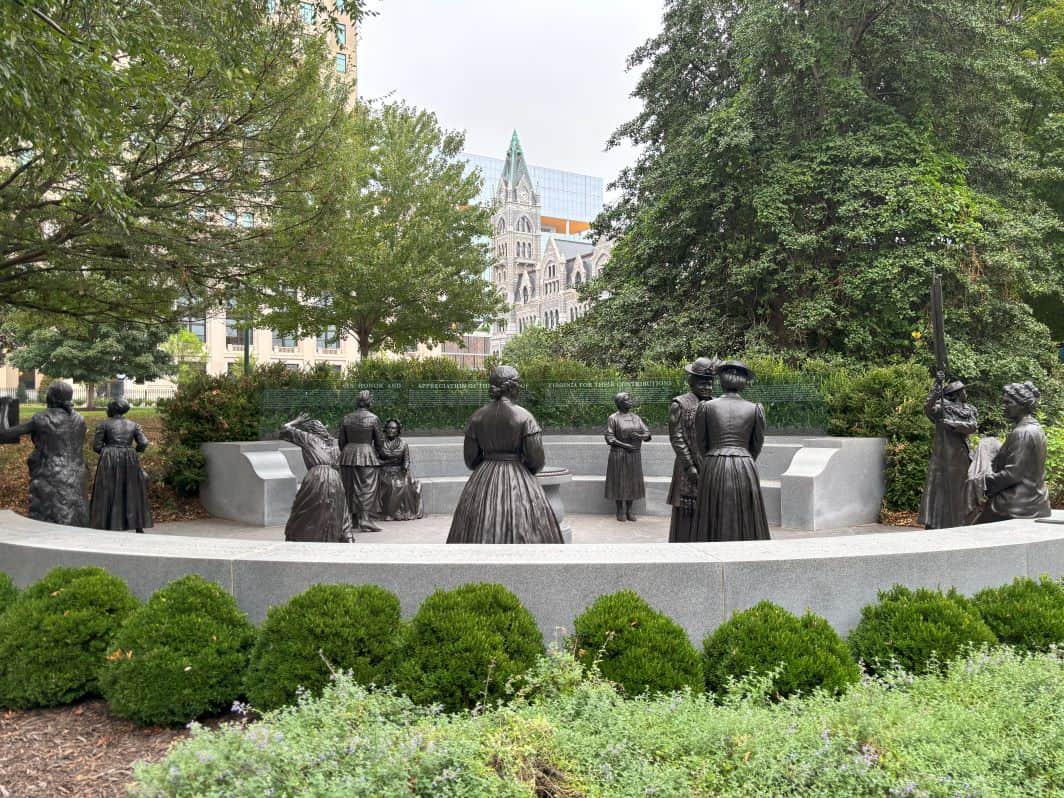
This monument features eleven life-sized bronze statues of trailblazing Virginia women, representing diverse eras, regions, and achievements.
Surrounding the figures, a glass Wall of Honor recognizes hundreds more women whose leadership, creativity, and service shaped our history.
Mindset Moment: Take time to think about how so many women made such an impact on how we live today.
Virginia Civil Rights Memorial
The Virginia Civil Rights Memorial honors the courageous individuals and movements that advanced equality and justice.
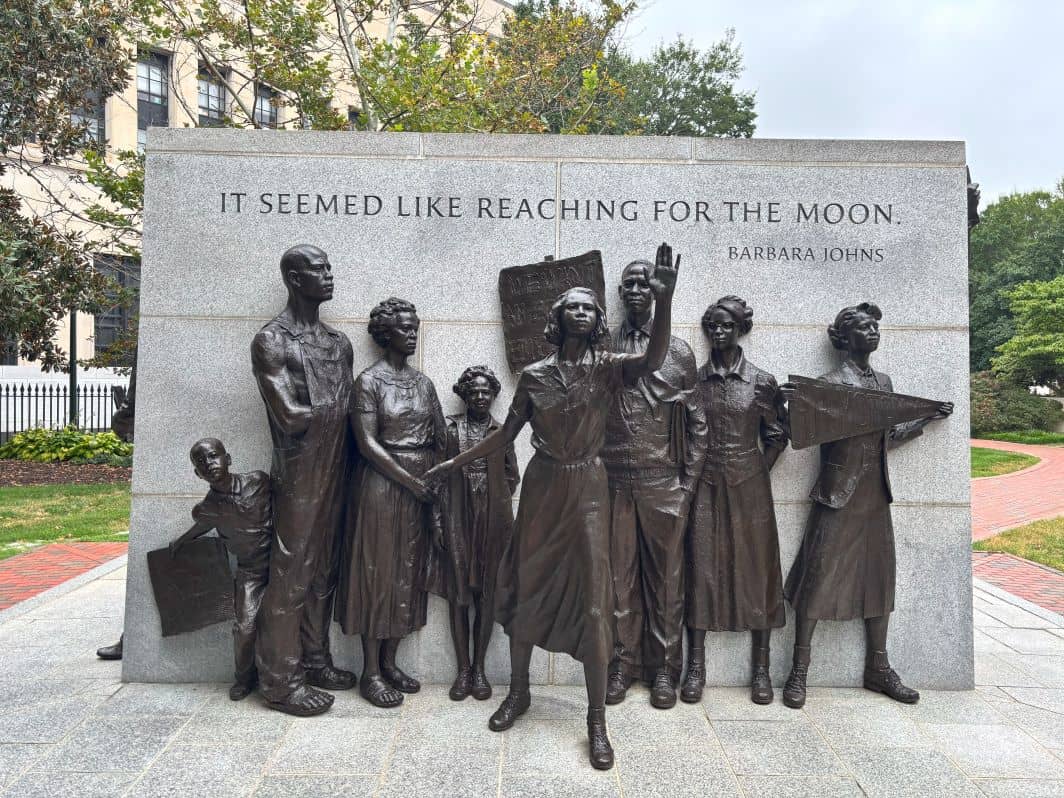
The Virginia Civil Rights Memorial serves as a reminder that the state’s story is not only about political institutions but also about the struggles and triumphs of its people. It provides a contemplative space where visitors can reflect on the ongoing journey toward equality and justice.
Mindset Moment: Take a moment to consider the courage of those who fought for civil rights in Virginia and how their actions continue to impact our society today.
Visiting Capitol Square offers one of the best introductions to the Virginia State Capitol. Before even stepping inside the building, you’re surrounded by monuments and stories that capture the Commonwealth’s influence on the nation’s history. It is a must-see area for anyone touring Richmond’s historic downtown.
The Seal of Virginia
Another significant symbol found throughout Capitol Square is the Seal of Virginia.
Adopted in 1776 during the American Revolution, the seal captures the spirit of independence and Virginia’s bold stance against tyranny.
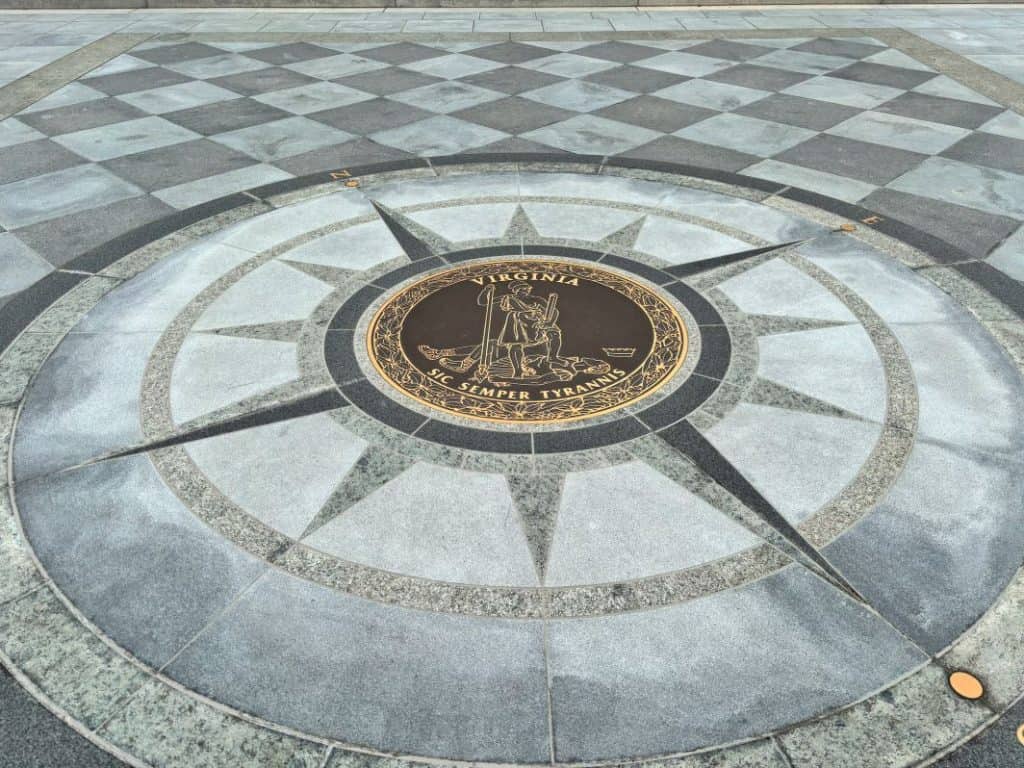
The central figure on the seal is Virtus, the Roman goddess of virtue. She stands tall with a spear and sword, symbolizing courage and strength, while one foot rests on the body of a fallen tyrant. The tyrant is depicted, representing the defeat of oppressive rule.
The Latin motto, Sic Semper Tyrannis, which translates to “Thus Always to Tyrants.”
This powerful imagery was chosen by Virginia’s leaders at the very moment they declared independence from Britain. It reflects the Commonwealth’s identity as a defender of liberty and a leader in the cause of self-government. It is a constant reminder of Virginia’s revolutionary heritage and its influence on the founding of the United States.
The Entrance to the Capitol
Most visitors to the Virginia State Capitol will enter through the Bank Street entrance, which serves as the main public access point.
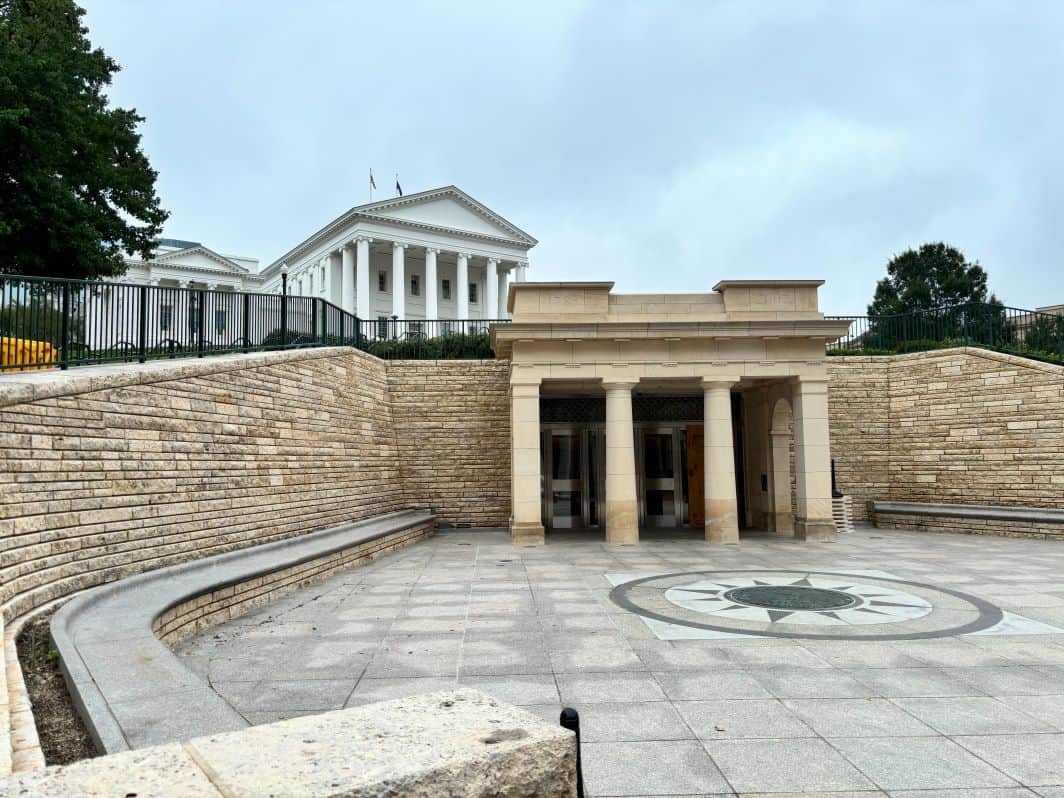
What makes this entrance unique is how it connects past and present. Jefferson’s Capitol was built to resemble a Roman temple, symbolizing democratic ideals and permanence. By contrast, the Bank Street entrance and underground visitor center reflect Virginia’s effort to preserve that history while meeting the needs of a modern, working government building.
Inside the Virginia State Capitol
Stepping inside the Virginia State Capitol in Richmond is like walking into a living museum of American democracy. While the building is still the active home of the Virginia General Assembly, much of it is open to the public, allowing visitors to experience the architecture, art, and history that have shaped the Commonwealth for more than two centuries.
Guided and self-guided tours begin at the Bank Street Visitor Entrance, where guests move from the modern visitor center into the restored historic spaces above.
Thomas Jefferson Statue
After passing through security at the Bank Street entrance, visitors are greeted by a striking bronze statue of Thomas Jefferson, the third President of the United States and the designer of the Virginia State Capitol.
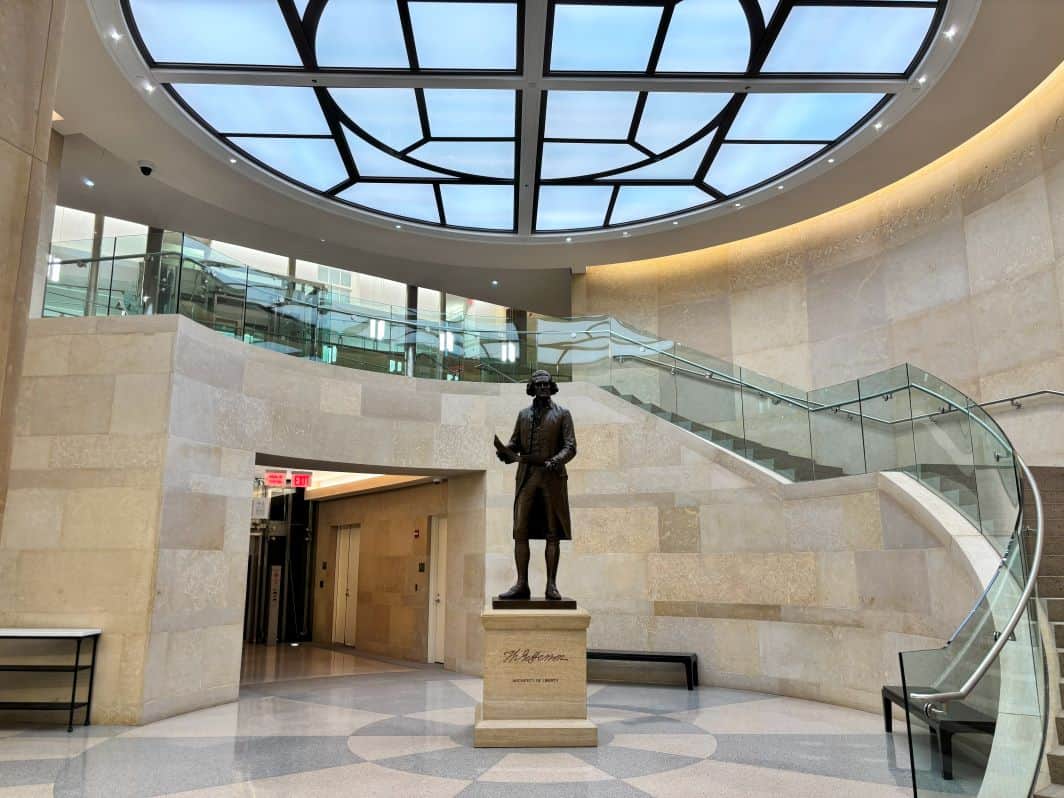
This statue serves as a fitting introduction to the building, as Jefferson’s architectural vision shaped its style.
Standing before the statue gives you a moment to reflect on how Jefferson’s ideals of democracy and design are embodied in the building.
The Rotunda
At the heart of the Virginia State Capitol is the Rotunda, a central hall designed by Thomas Jefferson to serve as both a functional and symbolic centerpiece of the building.
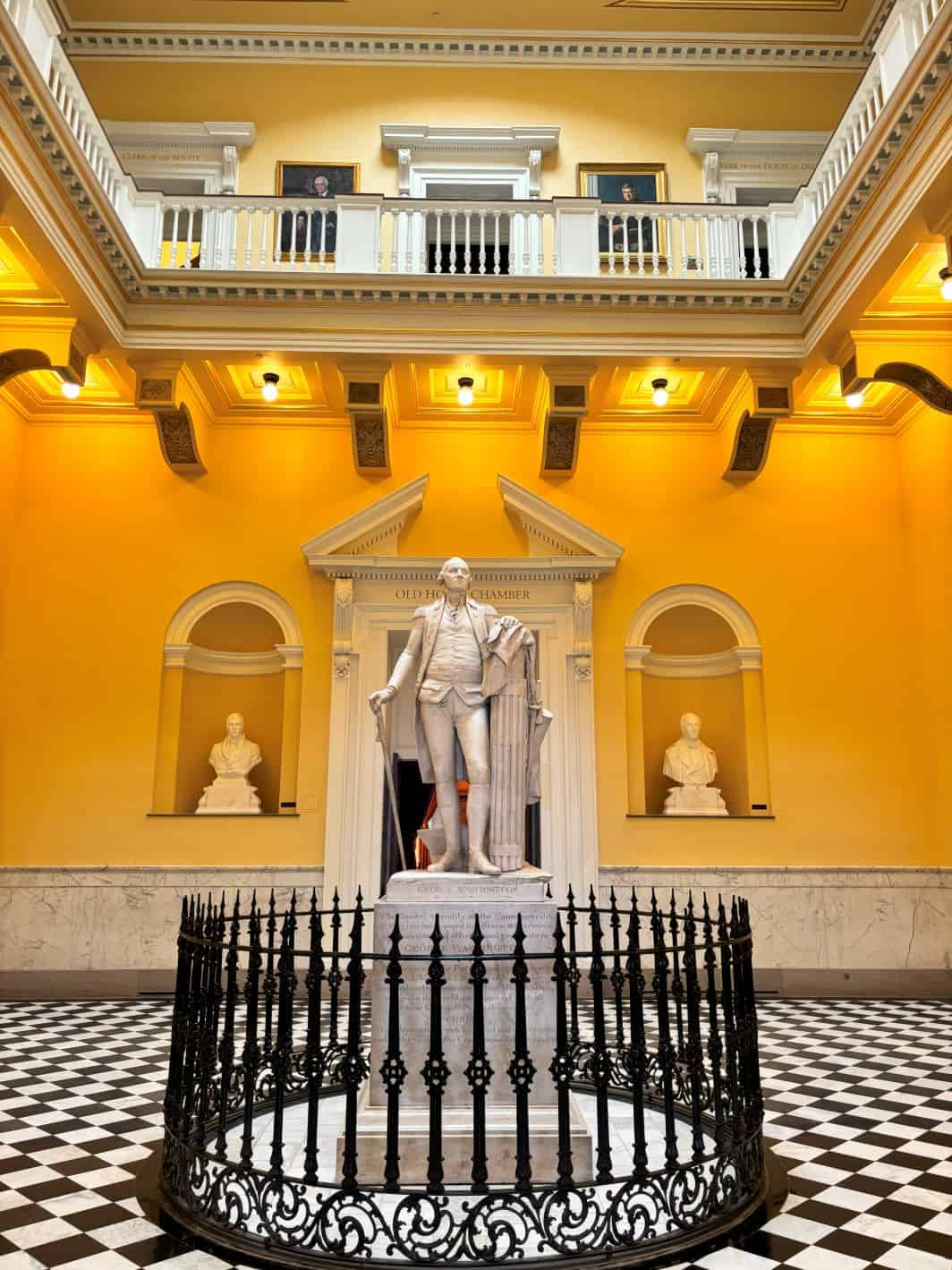
Dominating the Rotunda is the life-size marble statue of George Washington.
Surrounding the Rotunda are busts of other Virginia-born presidents: Thomas Jefferson, James Madison, James Monroe, William Henry Harrison, John Tyler, Zachary Taylor, and Woodrow Wilson.
These busts serve not only as tributes but also as educational tools, highlighting Virginia’s contributions to the presidency and the founding of the nation.
The Rotunda also functions as a central hub connecting the Senate and House chambers.
The Dome
Above the Rotunda is the Capitol’s dome, an architectural feature that was innovative for its time.
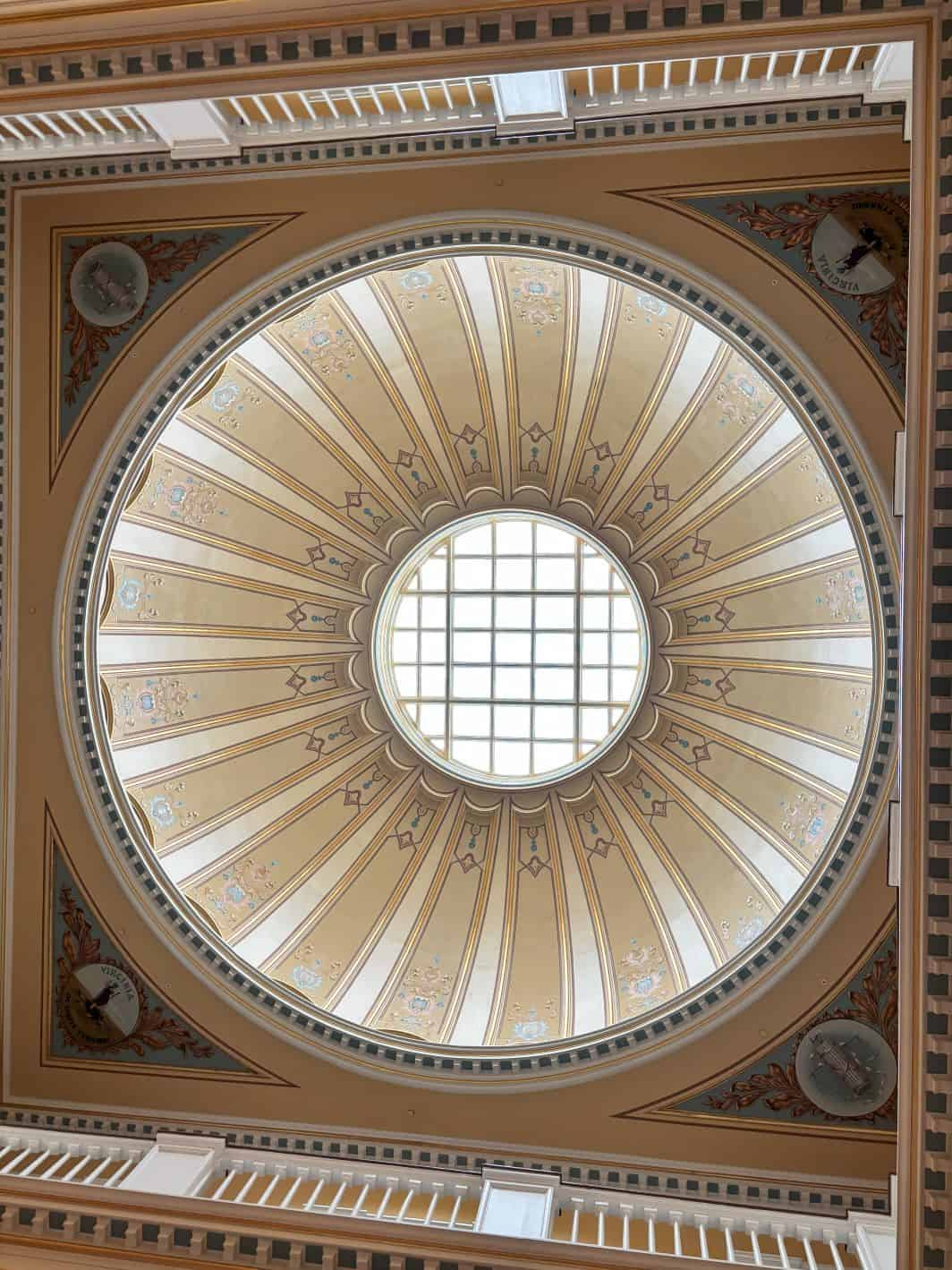
The dome allows natural light to filter into the Rotunda, illuminating the George Washington statue and surrounding busts of Virginia-born presidents.
Unlike the massive domes of many later state capitols, Virginia’s dome is modest in scale but elegant in proportion, reflecting Jefferson’s philosophy that government buildings should convey dignity without unnecessary extravagance.
Senate Chamber
The west wing of the Capitol is the Senate Chamber, where Virginia’s 40 senators meet.
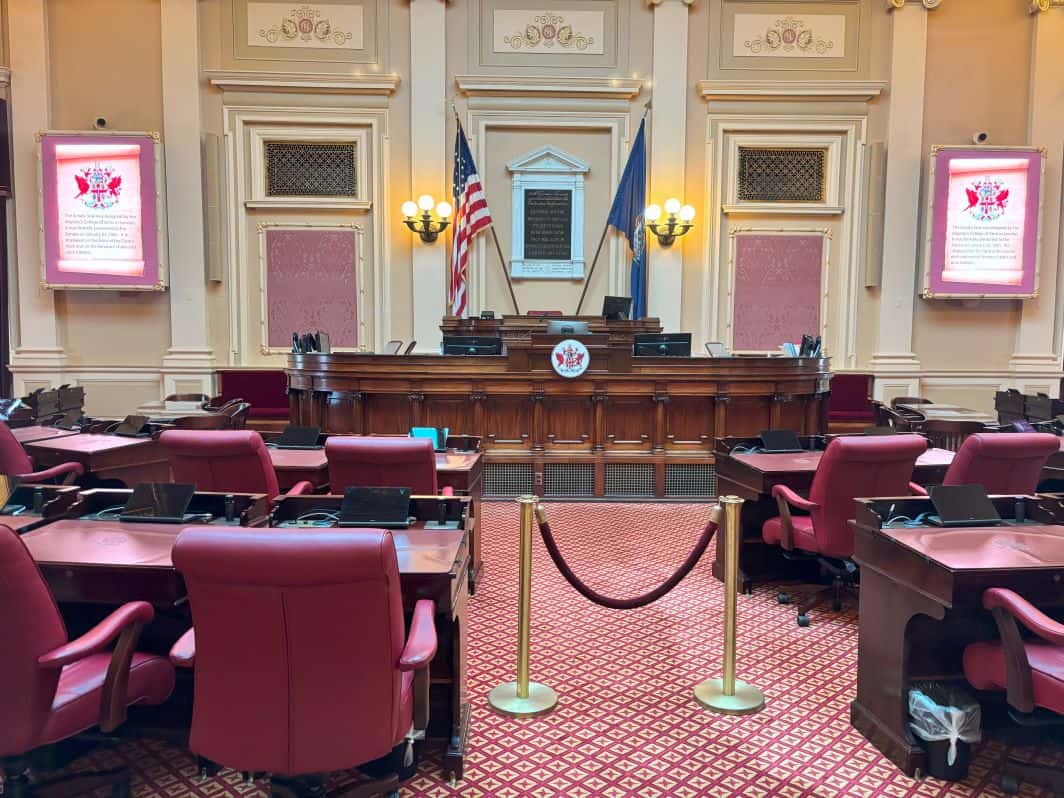
The chamber’s design reflects dignity and deliberation, with its semicircular seating arrangement.
Historically, the room hosted some of the state’s most significant debates and continues to serve as the heart of Virginia’s legislative process.
House of Delegates Chamber
Across the hall is the House of Delegates Chamber, home to Virginia’s 100-member lower house of the General Assembly.
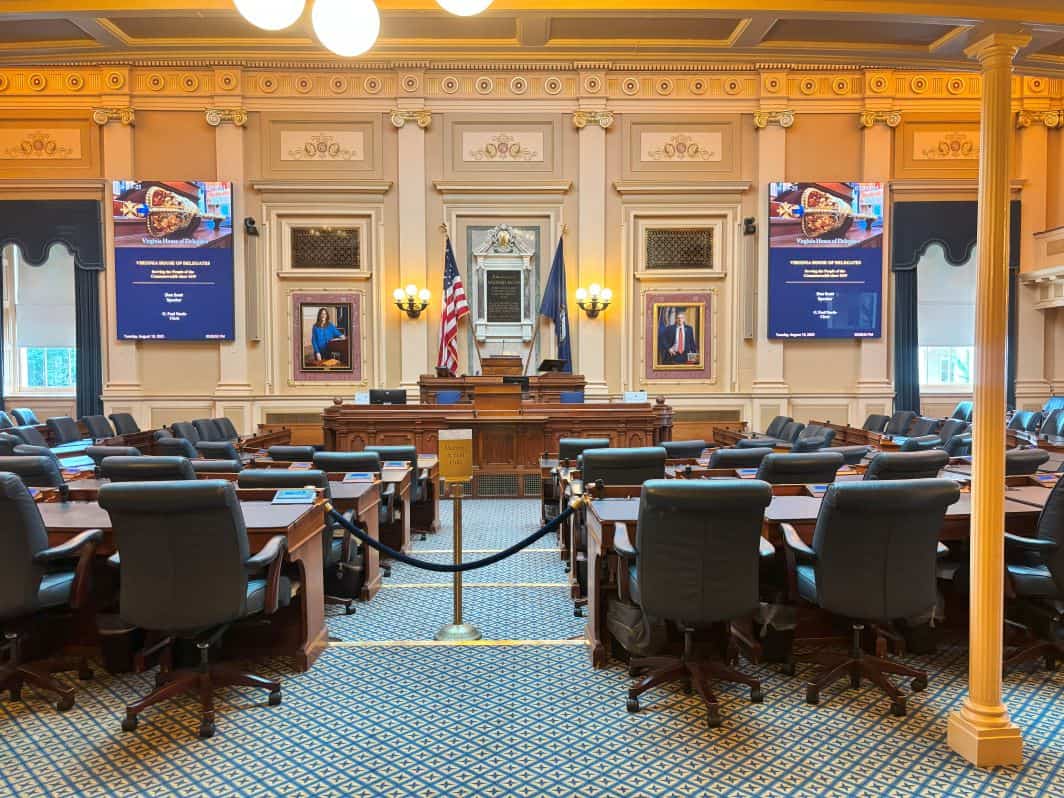
Larger and more dynamic in atmosphere than the Senate chamber, this room symbolizes the broader representation of the people. Many major state decisions have been debated here, and like the Senate, it is accessible to the public from gallery seating when the House is in session.
Old Hall of the House of Delegates
Before the current chamber was built, the Old Hall of the House of Delegates served as the meeting place for the lower house.
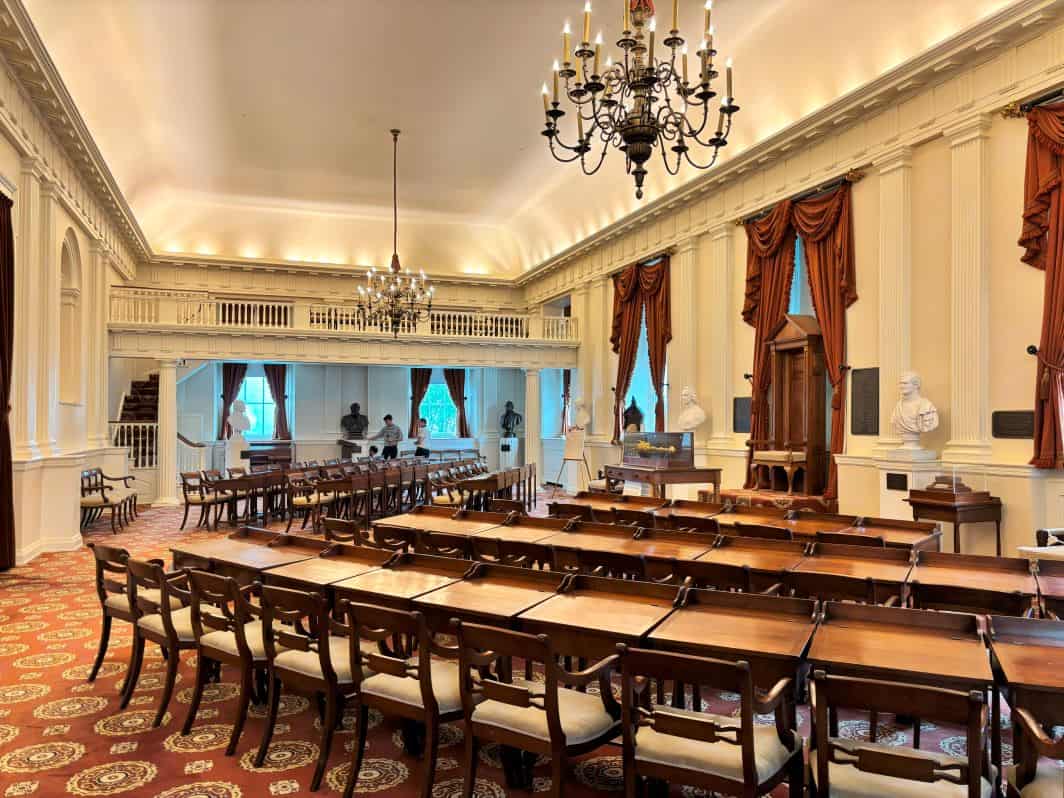
This historic room witnessed landmark events, including debates on states’ rights and secession in the lead-up to the Civil War.
Today, the restored hall serves as a ceremonial space and a powerful reminder of the weighty decisions made within these walls.
Old Senate Chamber
Similarly, the Old Senate Chamber preserves the history of Virginia’s upper house.
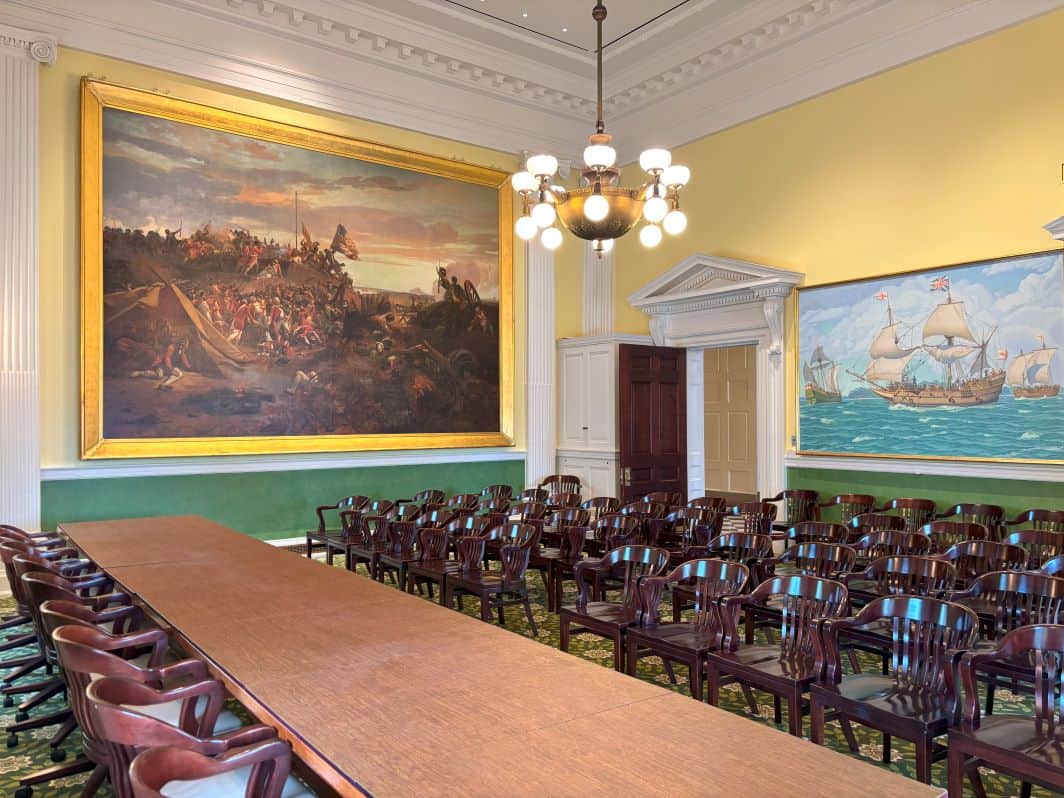
With its restored furnishings and exhibits, the chamber gives visitors a sense of how legislative business was conducted in earlier centuries. The room also served multiple purposes over the years, including as a meeting space for Virginia’s highest courts.
The Governor’s Gallery
Located on the third floor of the Virginia State Capitol, the Governor’s Gallery is a highlight for visitors interested in Virginia’s political history and leadership. The gallery features portraits of former governors, creating a visual timeline of the state’s executive leadership.
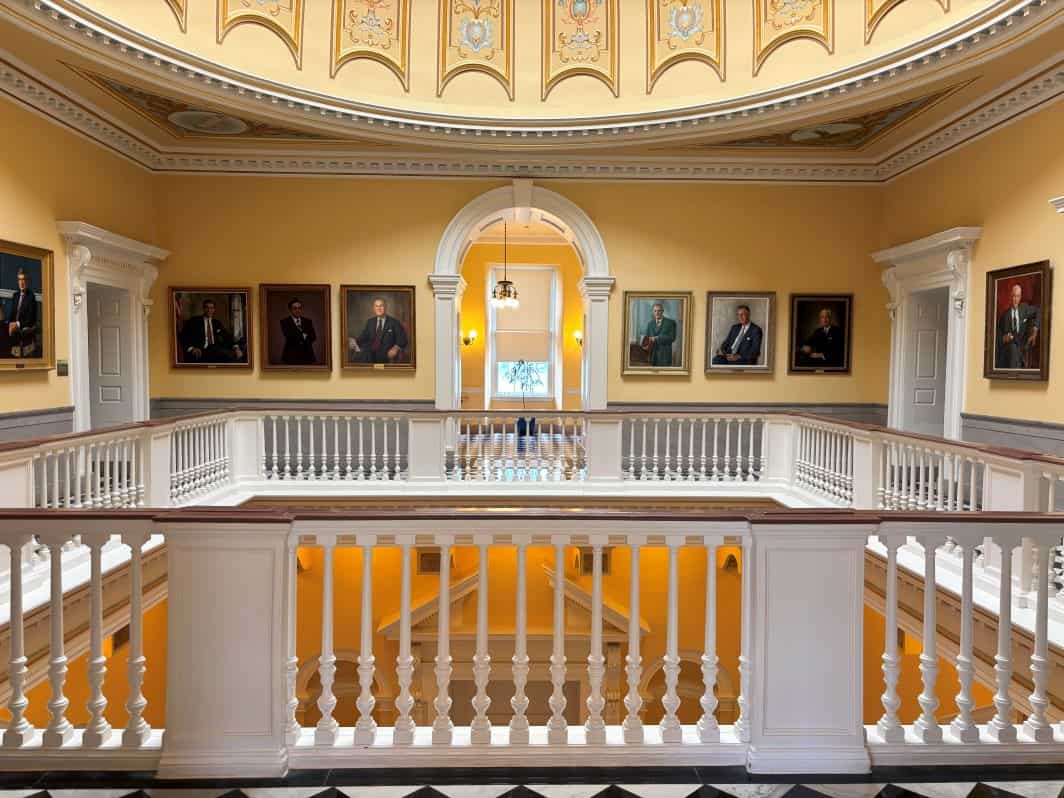
Every four years, a new governor’s portrait is added to the gallery. When this happens, the existing portraits rotate one position to the right, and the oldest portrait is retired from display. This tradition ensures the gallery remains up-to-date while honoring the legacy of Virginia’s governors.
Additional Highlights
The Executive Mansion
On the northeast corner of Capitol Square stands the Executive Mansion, the oldest continuously occupied governor’s residence in the United States.
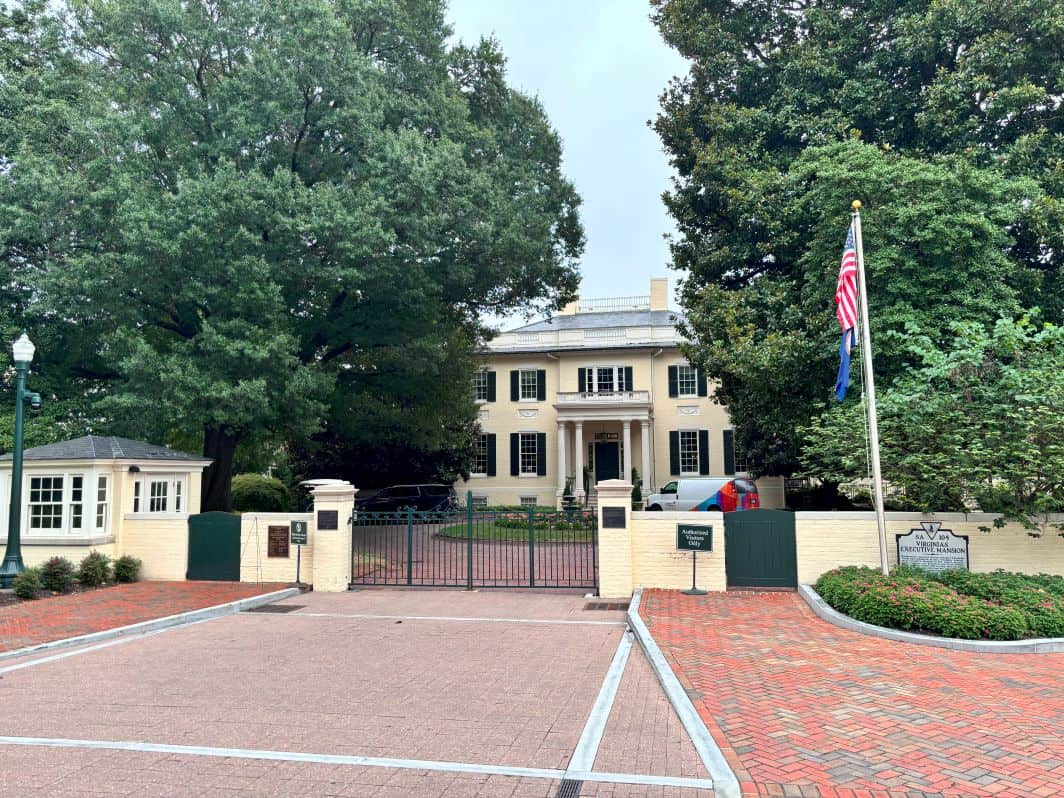
Built in 1813, it has served as the official home to every Virginia governor since James Monroe.
The mansion remains a working residence but also opens for tours on select days, offering a glimpse into the personal side of state leadership.
Its location within the square emphasizes how Virginia’s government functions as both a public institution and a lived experience.
The Liberty Bell Replica
As part of the 50 State Capitols Challenge, many travelers enjoy locating the Liberty Bell replicas that are found near state capitols across the country.
Virginia, however, is one of the few states where the Liberty Bell is not located at the State Capitol in Richmond.
Final Thoughts: Virginia State Capitol
Visiting the Virginia State Capitol in Richmond offers a unique glimpse into the history, architecture, and government of one of America’s most influential states.
Whether you’re chasing your 50 State Capitols Challenge or simply love exploring history and architecture, the Virginia State Capitol is a must-see destination.
Follow our 50 State Capitols Challenge to see how this visit fits into the larger journey across the country.
Need help planning your trip? Check out our Travel Resources page for tools and recommendations to make your Capitol visit seamless and unforgettable.
Mind Set On Travel Disclaimer
Mind Set On Travel contains affiliate links and is a member of the Amazon Services LLC Associates Program. If you make a purchase using one of our links, we may receive compensation from the company at no additional cost to you. Read our disclaimer here.